
The view from the waterline
Why the most considered safari camps are putting their guests level with the water and below the wildlife.
By Anna Walker Travel
A Change Of Vantage
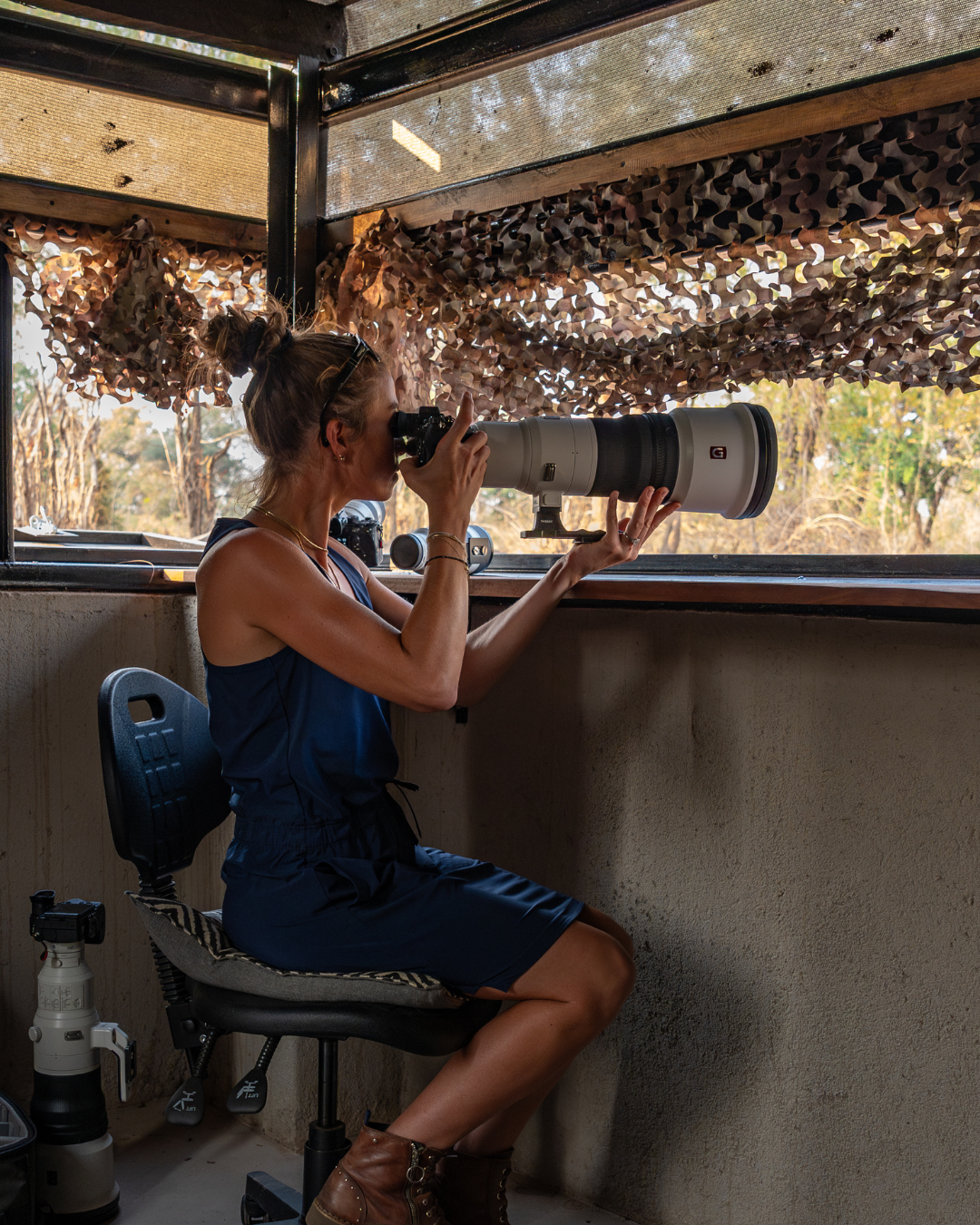
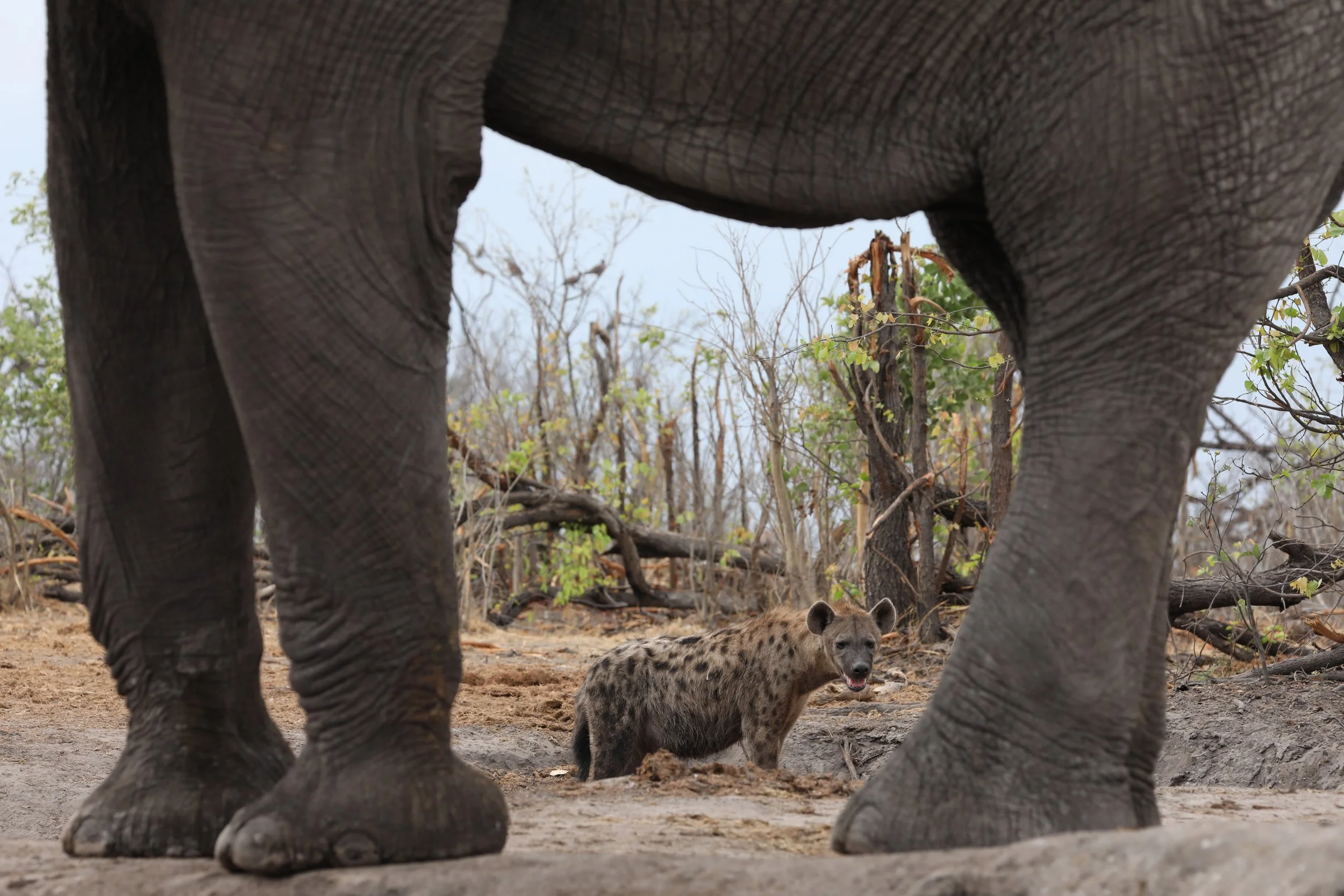
Most safaris are spent looking down. From the raised bench of a game vehicle, you watch the wildlife from above and at a polite distance which is the right way to cover ground, and the wrong way to feel small. A hide reverses that. Dug into the earth at the edge of a waterhole, its viewing slot often only inches above the surface, a hide puts you level with the water, and sometimes below the animals that come to drink from it. An elephant arriving to cool off no longer looks like a subject in a frame and rather looks like the largest thing you have ever shared a room with.
Hides, also called blinds, have existed in some form for as long as people have watched birds. What’s changed over the last decade or so, is how seriously a certain kind of safari lodge now takes them: not as a rough wooden box at the end of a path, but as a considered piece of design, positioned for light, built for stillness, and increasingly central to how the best operators think about showing guests the wildlife on offer.
Letting The Wildlife Come To You
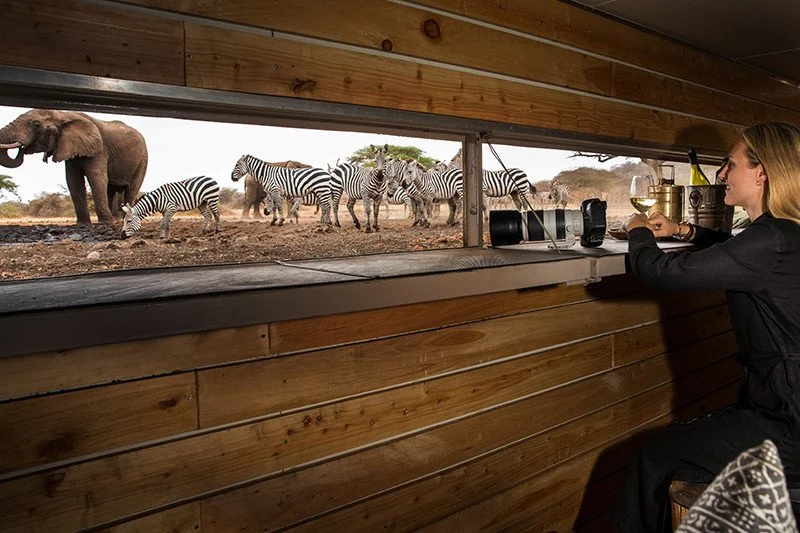
A game drive is an act of pursuit. You go out, you track and you find but a hide inverts the whole experience. With a hide, you arrive before first light, you settle in, and then you wait and the waiting is the experience. Because nothing about your presence announces itself, the animals behave as though you aren’t there. A martial eagle drops in to bathe, a breeding herd files down to drink in the order that herds observe or a leopard arrives at the water with the unhurried confidence of an animal that believes itself unobserved.
This is the perspective that, until recently, belonged almost entirely to wildlife filmmakers and a handful of professional photographers willing to spend days in a pit. The shift worth noting is that lodges have made it available to their guests not as a specialist add-on, but as part of the stay.
From Log Pile To Purpose Built
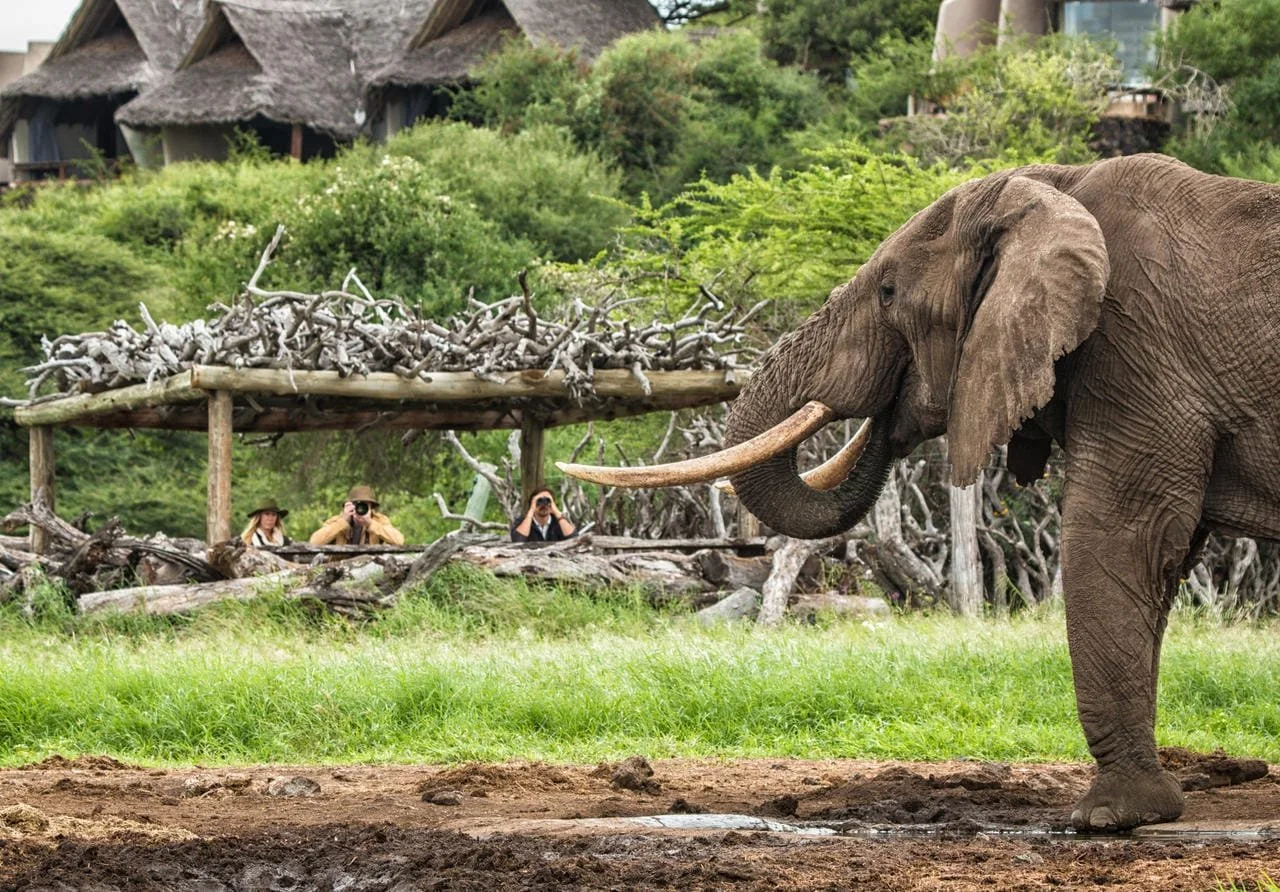
There is a wide spectrum here, and it helps to understand it before you choose. At the simplest, and often most charming end, sit the waterhole and log-pile hides - a sunken bunker a short walk or drive from camp, a few comfortable chairs, a flask of coffee, and a view across the water that fills slowly through the heat of the day.
At the other end is the purpose-built photographic reserve. Zimanga, in South Africa’s KwaZulu-Natal, was the first reserve in Africa designed specifically around the needs of wildlife photographers where its hides were created by the Hungarian photographer Bence Máté, a former BBC Wildlife Photographer of the Year. They range from reflection hides built for small birds to overnight hides where you can photograph rhino and elephant at the water’s edge after dark. The engineering there is genuinely specialist: one-way glass, sound-dampened interiors, viewing slots set deliberately at the waterline. It is the reference point that everyone else measures themselves against.
The camps we work with sit at different points along this spectrum and that, rather than sheer sophistication, is what makes them worth knowing about.
Where We Send People
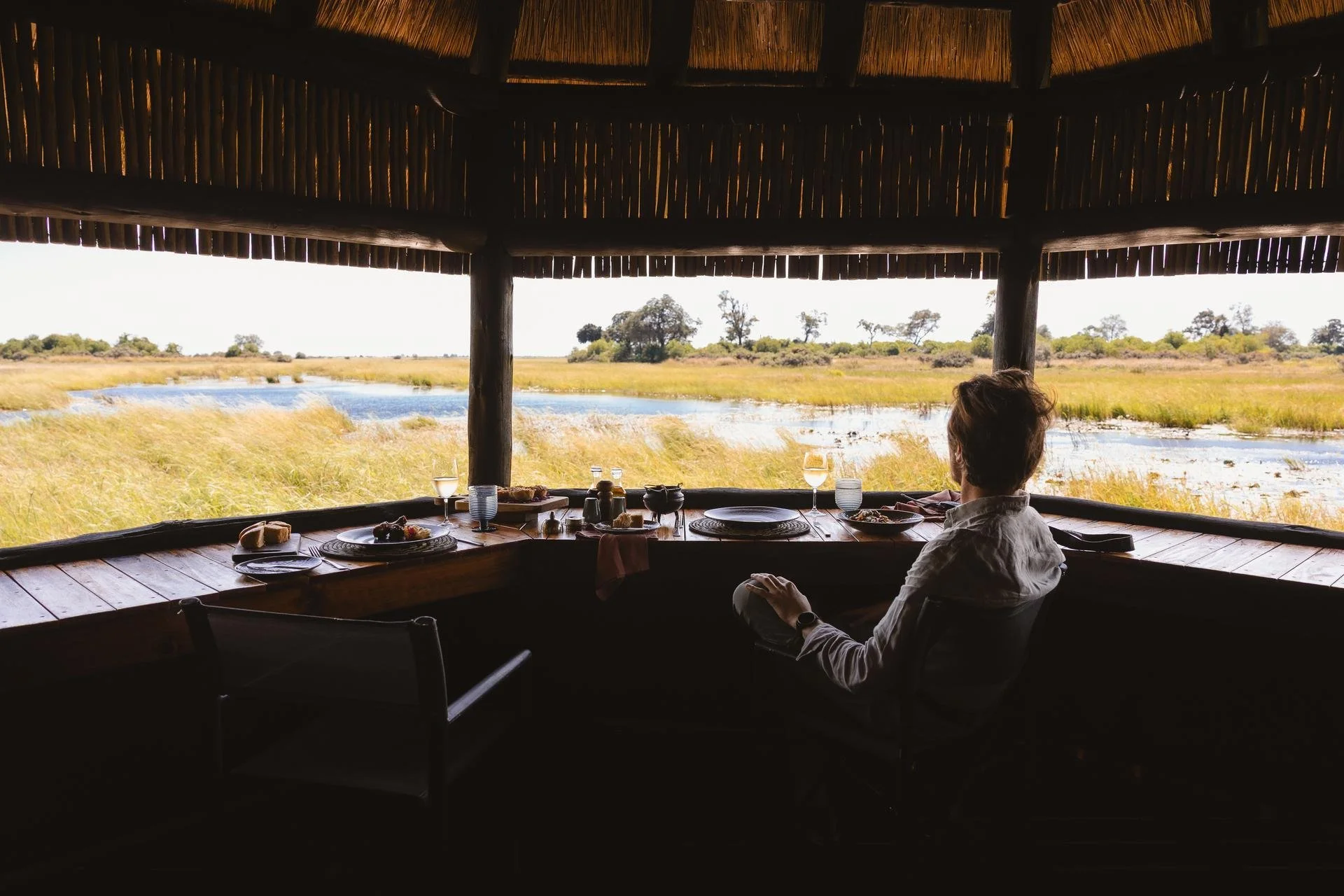
In Botswana, two lodges put you underground at the water. At King’s Pool, in the game-rich Linyanti, there is a sunken hide a short drive from camp set on the edge of a waterhole, while a second hide at camp looks out over lily-covered lagoons and rewards anyone interested in the Okavango’s birdlife. Further into the Delta, guests at Tuludi can spend time at the Pula Pan hide in the vast Khwai Private Reserve - a sunken underground hide at a busy waterhole, designed for eye-to-eye, almost ankle-level encounters with the herds of elephant that come to jostle for water.
In Zambia, Sungani takes a different approach again. Set in the remote Lusangazi sector of South Luangwa, the park’s little-known southern reaches, it offers not a single hide but a network of them. Built by resident photographer and head guide Michael Davy, they range across levels and landscapes: eye to eye with hippo, a low angle looking up at elephant, and an elevated perch on the riverbank for the bursts of colour as carmine bee-eaters come to nest. Back at camp, there’s a photographic studio for editing the day’s images.
In Zimbabwe, The Hide has made the structure its identity. Its original hide is disguised as a termite mound overlooking a waterhole; a second, underground hide can be reached independently from camp, set at a busy waterhole in Hwange; a park that supports one of Africa’s great elephant populations.
In Kenya, Ol Donyo sits in the volcanic Chyulu Hills between Amboseli and Tsavo. Below the lodge, two hides face a waterhole - one at ground level and one sunken - long associated with photographs of the region’s great “big tusker” elephant bulls. The waterhole below is fed with water from the lodge, which keeps it reliable throughout the drier months.
The Discipline Of Staying Still
The honest appeal of a hide is that it asks something of you. There’s no guide narrating, no radio call to the next sighting, no momentum carrying you onto the next thing. There is simply a waterhole, a long stretch of quiet and your own attention. For some travellers that’s the single best hour of a trip; for others it is a test of patience that they’d rather not sit through.
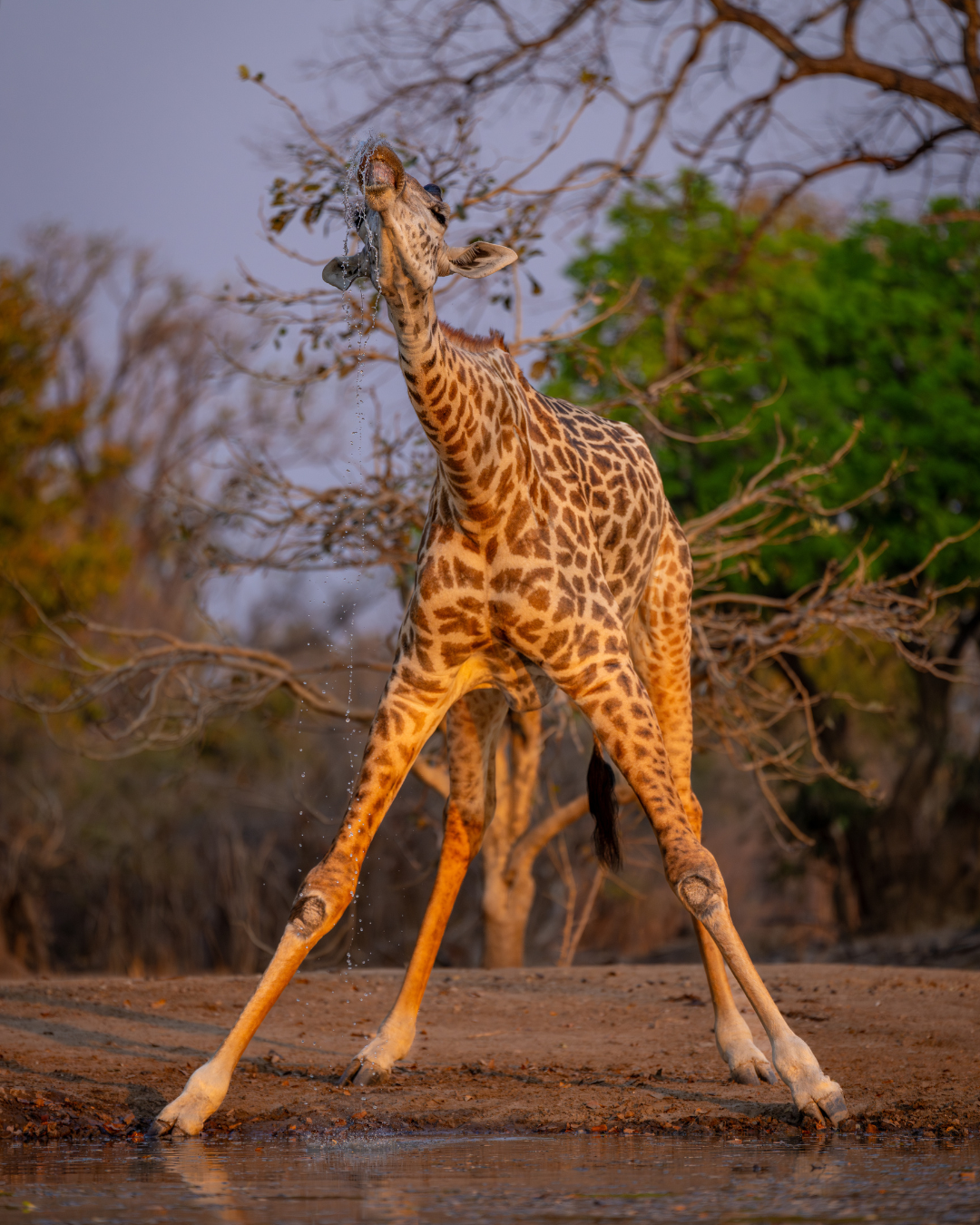
It is also, increasingly, not just for photographers. A child watching a giraffe splay its forelegs to drink, a few feet away and at eye level, will remember it for the rest of their life with no camera required.
“A hide changes the grammar of a safari. Instead of going to find the wildlife, you stay still and let it decide whether to come to you.”
A Lighter Footprint, Honestly Told
There is a quieter, principled case for hides too, though it should be made carefully rather than oversold. A hide is, by design, a low-impact way to watch wildlife: no engine, no diesel, no vehicle edging off-road for a better angle, no pressure on an animal to tolerate an approach. You are still, and the wildlife sets the terms.
The better operators tend to extend that same care beyond the hide itself. Sungani is a useful example: built in a corner of South Luangwa that had been written off as too remote, it was constructed largely by local contractors, employs from the surrounding community, and works alongside Conservation South Luangwa, the Zambian Carnivore Programme and Zambia’s parks authority on anti-poaching in the area.
That said, a hide is still an intervention. Many sit at waterholes that are pumped or maintained, which shapes animal behaviour in ways worth being clear-eyed about. The point is not that a hide is automatically more virtuous than a drive but it’s that, in the right hands, it offers a calmer, lower-impact register of an encounter that sits naturally alongside how we think about thoughtful travel.
Why This Shapes How We Plan
The questions we ask of any property haven’t changed: who benefits from a visit, what does it help protect, what does it leave behind. But a well-conceived hide tells us something useful in passing: that an operator has thought hard about how its guests encounter wildlife, not just how many species they tick off. The lodges getting this right are, more often than not, the same ones getting the harder things right too.
So, if a slower, closer, quieter way of watching wildlife appeals to you, whether you travel with a long lens or simply a willingness to sit still, that’s a conversation we’d very much enjoy having with you so please do get in touch with us.
Anna Walker Travel
Bespoke journeys across sub-Saharan Africa and the Indian Ocean
Thoughtful travel, tailored to you.